
The Friday market
The big market of the week, el mercadillo, is held every Friday on the fairground by the Blas Infante arches, the triumphal-arch town gate where the N-340 passes north of the centre. The site lies between the main road and McDonald's, opposite Aldi and Lidl, and it is the same ground the August fair takes over. Around a hundred stalls go up from nine o'clock; by ten it is in full swing, and at two they pack up.
About half of it is clothes, shoes and textiles – cheap, plentiful and in every quality – and the rest is everything else: kitchenware, ceramics, esparto and wicker baskets, sheets and towels, bags, toys, spices in sacks, olives and pickles in buckets, dried fruit, nuts, honey and cane syrup from the hills, ham and cheese, flowers and plants. The fruit and vegetable stalls sell what grows in the valleys around the town: cherimoya, mango, avocado, loquats and the tomatoes and peppers that never taste the same at home.
- When
- Fridays 9:00–14:00, all year. Cancelled on the Fridays closest to 15 August, when the fair takes the site, and sometimes on public holidays – the town hall announces it on almunecar.es.
- Where
- The fairground (recinto ferial) by Paseo de Blas Infante, between the N-340 and McDonald's. Ten minutes' walk from the bus station, fifteen from the old town.
- Parking
- Hard on Fridays, especially in summer. The car parks under Paseo del Altillo and on Avenida Juan Carlos I are ten minutes away; walk from there.
- Payment
- Cash. A few of the bigger stalls take cards, but do not count on it.
The Sunday flea market
On Sundays the same fairground hosts an antiques and flea market, el rastro or mercadillo de antigüedades. Dealers and private sellers alike: old coins and pocket watches, vinyl records, cameras, tools, rustic furniture, Moroccan lamps and pottery, books, toys and boxes of things nobody can quite classify. The stock changes from week to week, prices are negotiated, and whoever comes early finds most.
- When
- Sundays 9:00–14:00, but not in July and August and not on Palm Sunday, Easter Sunday or the Sundays around 15 August.
- Where
- The fairground by the Blas Infante arches, the same site as the Friday market.
The market hall: Mercado Municipal
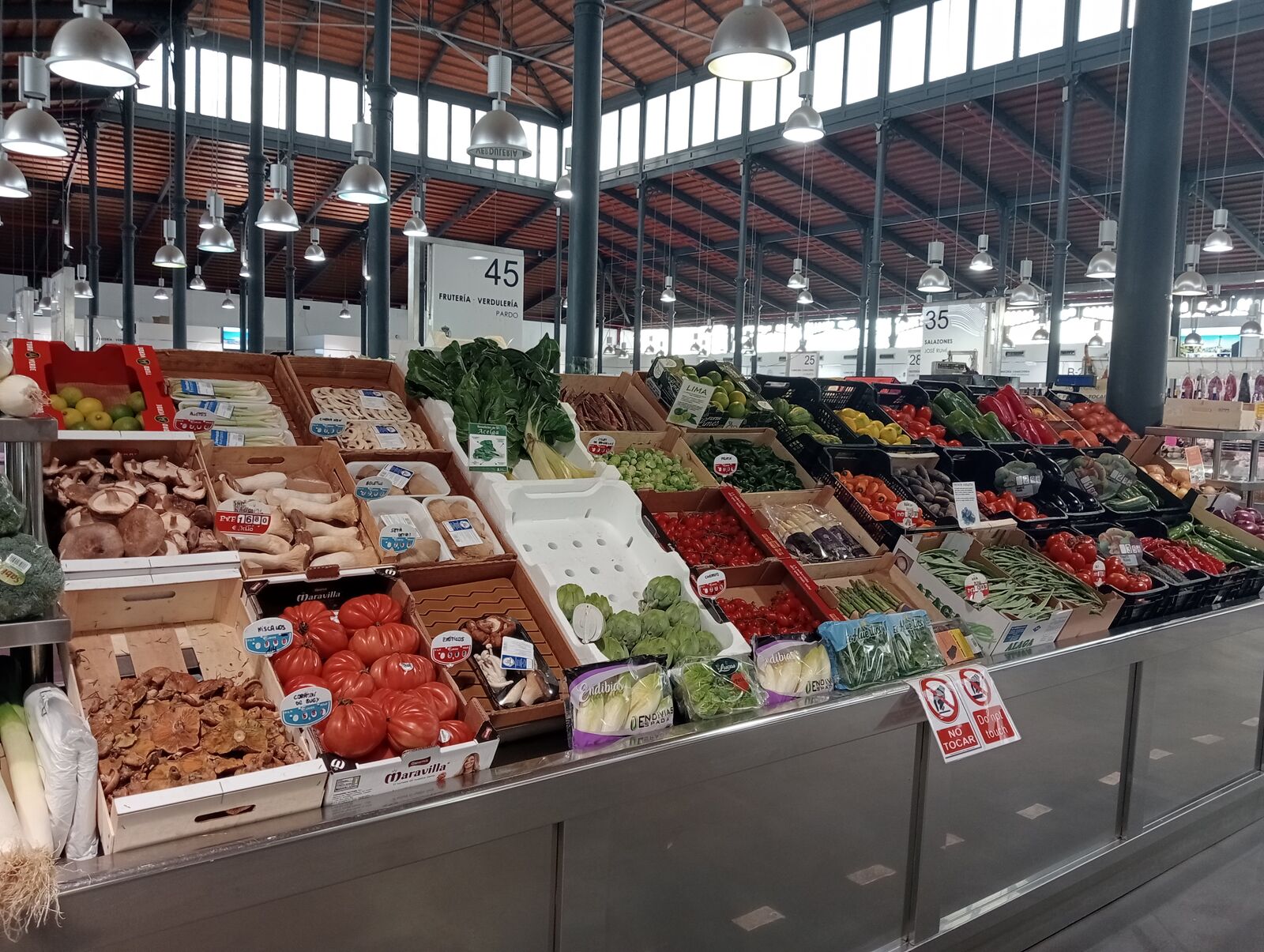
Almuñécar's market hall stands in the middle of town, in the block between Avenida de Europa and Avenida de la Cala, next to the aquarium. The old hall was demolished in 2020, and after several years of building the new one opened in spring 2026: bright, airy and with an underground car park of a couple of hundred spaces that leads straight up into the hall. There is room for some forty stalls, and they are filling up gradually.
The fishmongers get the day's catch from Motril's port – this is where you buy sardines for espeto, boquerones, squid and prawns – and the greengrocers sell what is grown in the Río Verde and Río Seco valleys. There are also butchers, a delicatessen with ham and cheese, a bakery, eggs and a florist. Three bars and cafés with terraces have their own street entrances and stay open longer than the stalls, so the hall doubles as a place for breakfast or a coffee.
- When
- Monday–Saturday 8:00–15:00 for the stalls. The bars and cafés keep longer hours; on Sundays the stalls are closed.
- Where
- Between Avenida de Europa and Avenida de la Cala, by the aquarium, five minutes from Plaza de la Constitución.
- Parking
- Car park under the hall, entrance from Avenida de la Cala.
The eco market
Since 2024 a small organic market has been held one Sunday a month on Plaza del Agua, the square by the local police station on Avenida Fenicia. A dozen producers from the area sell organic vegetables and fruit, goat's cheese, honey, bread, olive oil and natural cosmetics – most of it grown or made within a few kilometres.
- When
- The last Sunday of the month, roughly 9:30–14:00.
- Where
- Plaza del Agua, Avenida Fenicia, by the Policía Local.
Summer evening markets
From early July to mid-September the promenades turn into evening markets. On Paseo de San Cristóbal some thirty stalls set up, on Paseo de Velilla just under twenty, all crafts: jewellery, leather goods, Ibiza-style clothes, ceramics, wooden toys, soap, paintings. They open at seven in the evening as the sun starts to go down and carry on until midnight – part of the evening stroll, el paseo, rather than somewhere you drive to.
At Plaza Abderramán below the Peñón del Santo there are also fixed summer kiosks with scarves, bags and souvenirs, and in Parque El Majuelo the small white craft cottages line the paths, with varying and limited hours.
- When
- 1 July–15 September, daily roughly 19:00–24:00.
- Where
- Paseo de San Cristóbal and Paseo de Velilla; kiosks at Plaza Abderramán.
La Herradura
La Herradura has its own Friday market on Plaza Nueva, smaller than Almuñécar's with around twenty stalls but the same mix: clothes, shoes, household goods, flowers, fruit and vegetables. The village's small market hall is on Calle Gonzalo Barbero near the beach at the entrance to the village, open Monday to Saturday mornings, with fish, meat, fruit and vegetables.
One weekend in July, around Virgen del Carmen on 16 July, hundreds of candles are lit in the lanes of the old village for the Mercadillo Luz de Luna: an evening market with craft stalls, music, street performers and children's activities along Calle Príncipe and Calle Canalejas, Friday to Sunday from half past six in the evening.
- Friday market
- Fridays 9:00–14:00, Plaza Nueva.
- Market hall
- Monday–Saturday mornings, Calle Gonzalo Barbero.
- Luz de Luna
- One weekend in mid-July, the old village, from 18:30.
The Christmas and medieval market
Around the Spanish long weekend of 6–8 December – Constitution Day and the Immaculate Conception – Paseo del Altillo fills with market stalls for three days. Some years the theme is medieval, with falconers, jugglers, fire shows and parades; other years it is a straightforward Christmas market with crafts and food. The stalls open at eleven, close for the siesta and open again at five until late in the evening. Motril, Salobreña and Nerja also have Christmas markets in December.
Markets nearby
_1.jpg)
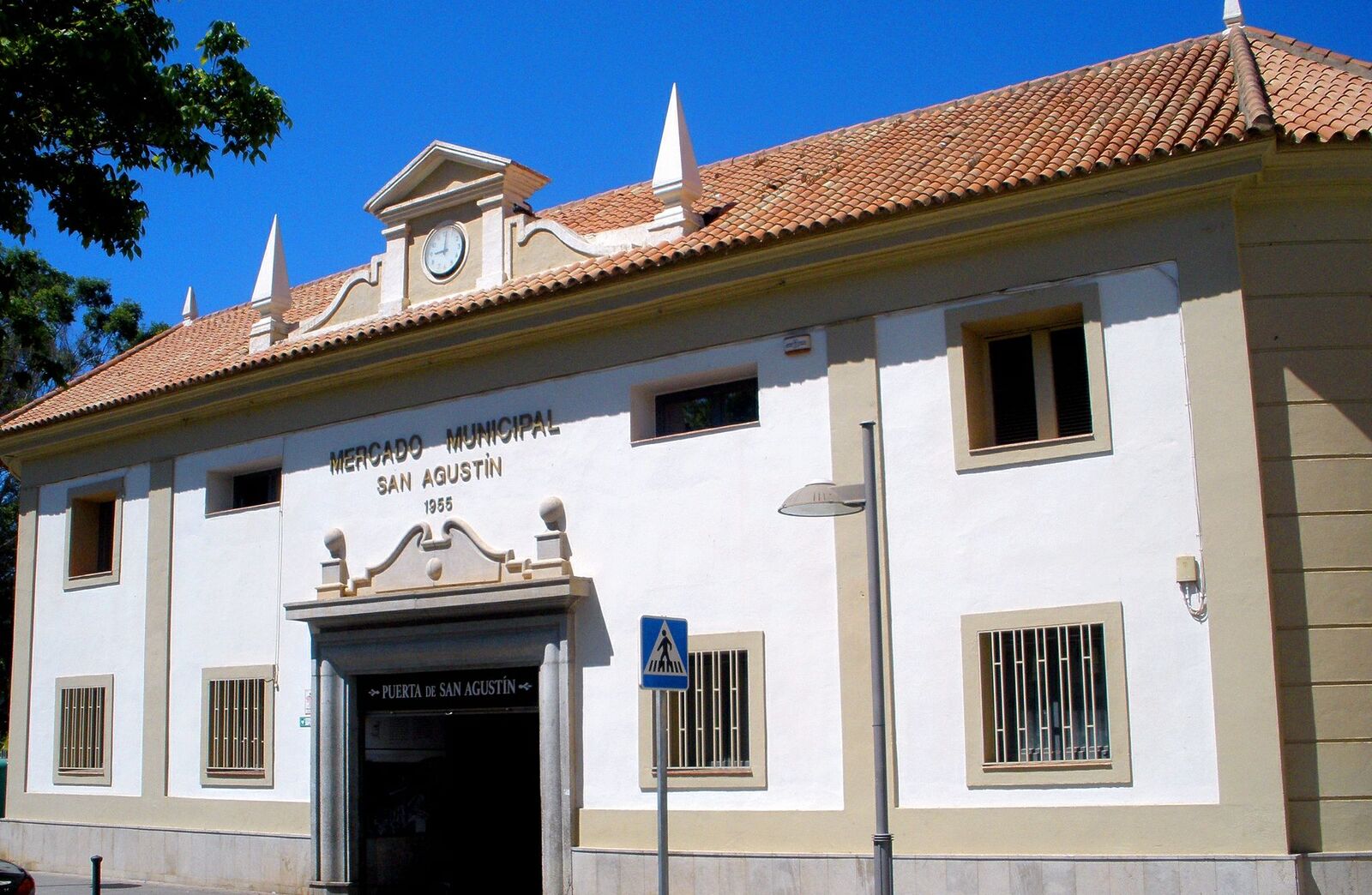
The markets along the coast rotate between the towns, so there is a market somewhere almost every day. By car none of them is more than half an hour away; ALSA buses also run to Nerja, Salobreña and Motril.
| Day | Town | Good to know |
|---|---|---|
| Tuesday | Nerja | Big market in the Almijara area east of the centre, 9:30–13:30. Very popular with foreign residents; park early. |
| Tuesday | Motril | Avenida Rambla de los Álamos, 9:00–14:00. The biggest on the province's coast. |
| Tuesday | Salobreña | At the entrance to the town, mornings. |
| Friday | Almuñécar | The fairground by the Blas Infante arches, 9:00–14:00. |
| Friday | La Herradura | Plaza Nueva, 9:00–14:00. |
| Friday | Motril and Salobreña | Both also hold a market on Fridays, mornings. |
| Sunday | Almuñécar | Antiques and flea market on the fairground, 9:00–14:00, not July–August. |
| Sunday | Nerja | Flea market (rastro) on the market site in Almijara, mornings. |
| Fridays in July–August | Salobreña | Night market on the Vial Verde, 20:30–24:00. |
Good to know
- Cash. At the mercadillo and the flea market cards are rare. In the market hall most stalls take them.
- Do not touch the fruit. At the stalls you point and say what you want – ¿me pone un kilo de tomates? – and the seller picks. Squeezing it yourself is frowned upon.
- Haggle in moderation. On clothes, bags and flea-market finds it is expected; on food it is not.
- Bring a bag. Bags are available, but your own bag or a basket from the esparto stall is better.
- Watch your bag. The crush at the Friday market is one of the few places in Almuñécar where pickpocketing happens.
- Holidays move everything. If a Friday falls on a public holiday the market is sometimes held the day before, sometimes not at all. The town hall's website and Facebook page are quickest.
- Want to sell? A stall at the Friday and Sunday markets needs a permit from the town hall, applied for via almunecar.es. The queue is long.