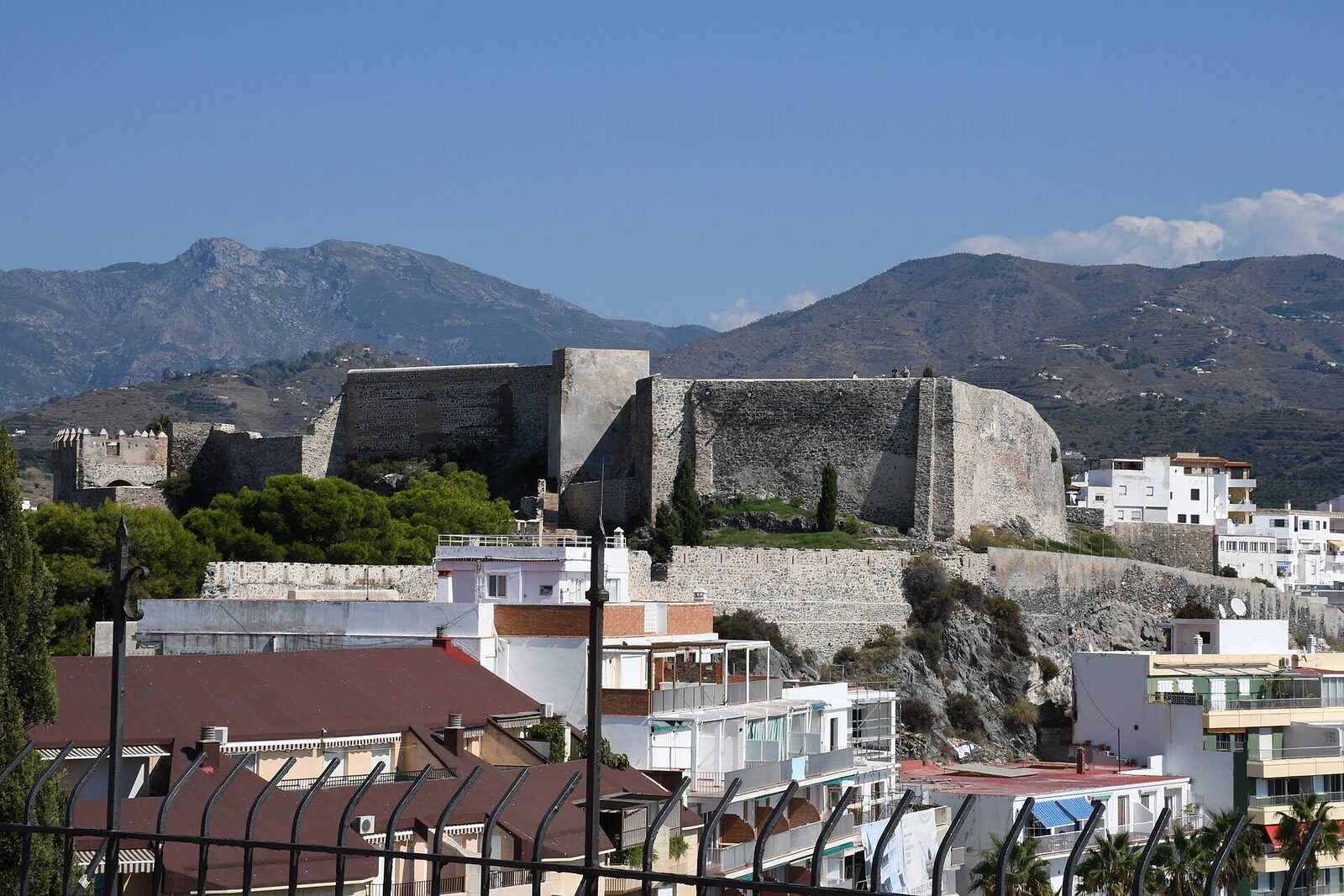

Castillo de San Miguel
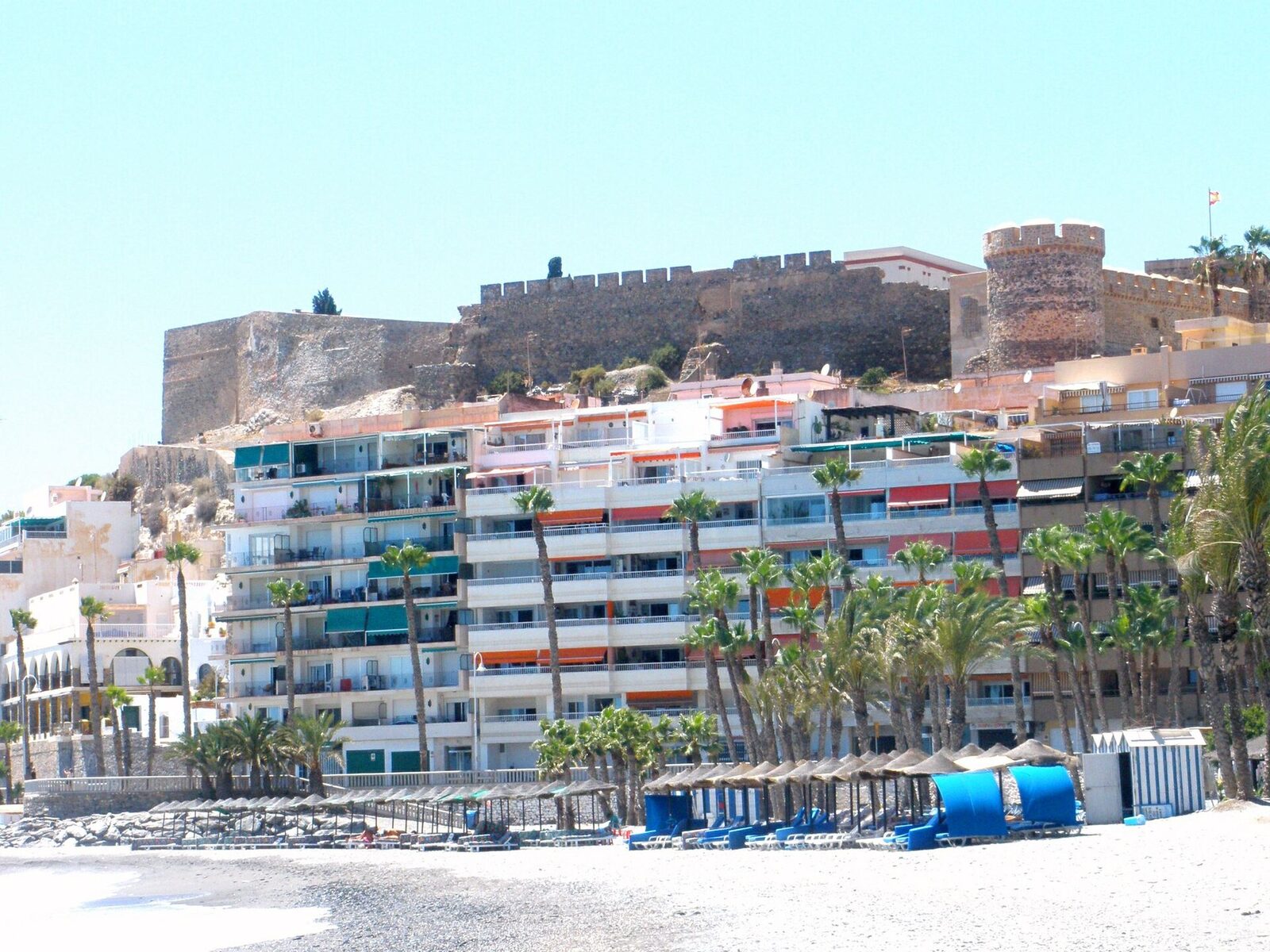

The castle on the rock above the old town has been fortified since the Phoenicians. Most of what you see today is Moorish and Castilian: the walls from Nasrid times, the round towers and the gate with its drawbridge from the sixteenth-century rebuilding under Charles V. Inside are excavated remains of the Roman buildings, a small museum on the town's history and a dungeon. From the towers you see the whole coast from Cerro Gordo to Salobreña and the mountains behind.
Open Tuesday to Sunday, mornings and afternoons with a break in the middle of the day; closed Mondays. The ticket also covers the Cueva de Siete Palacios. The way up goes through the lanes of the old town – steep, but short.
- Address
- Calle San Miguel Bajo, at the top of the old town
- Time
- 1–1.5 hours including the museum
- Ticket
- A few euros; combined with the Cueva de Siete Palacios
Peñón del Santo
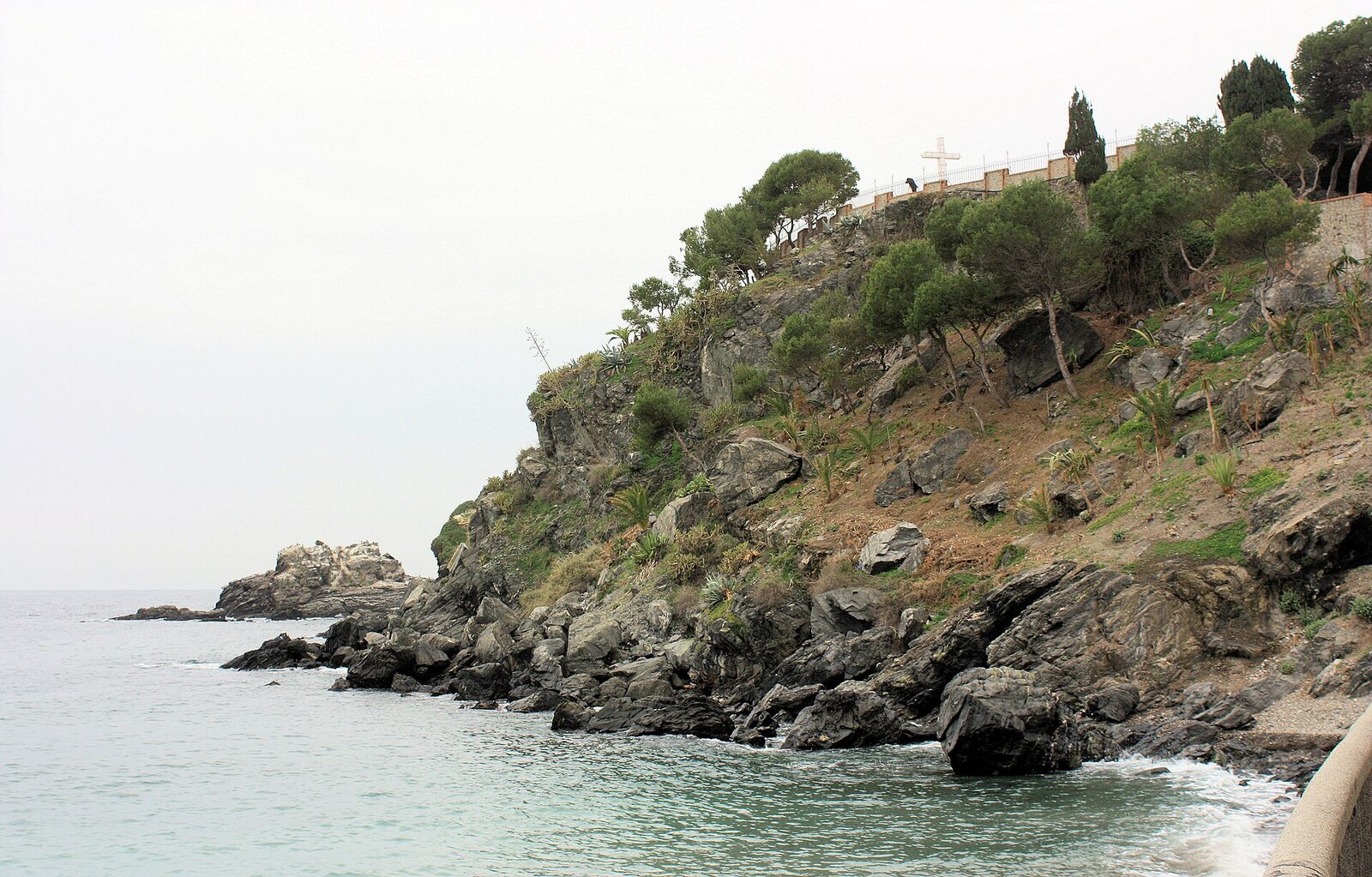

The rock that splits the town's shore in two is Almuñécar's signature. Steps lead up to the cross on top, a monument to Abd ar-Rahman I's landing in 755 and a viewpoint with beaches on both sides. The August fair week ends here with fireworks. On the west side the small Peñones de San Cristóbal sit out in the water, where the snorkellers go.
Parque El Majuelo and the salting factory
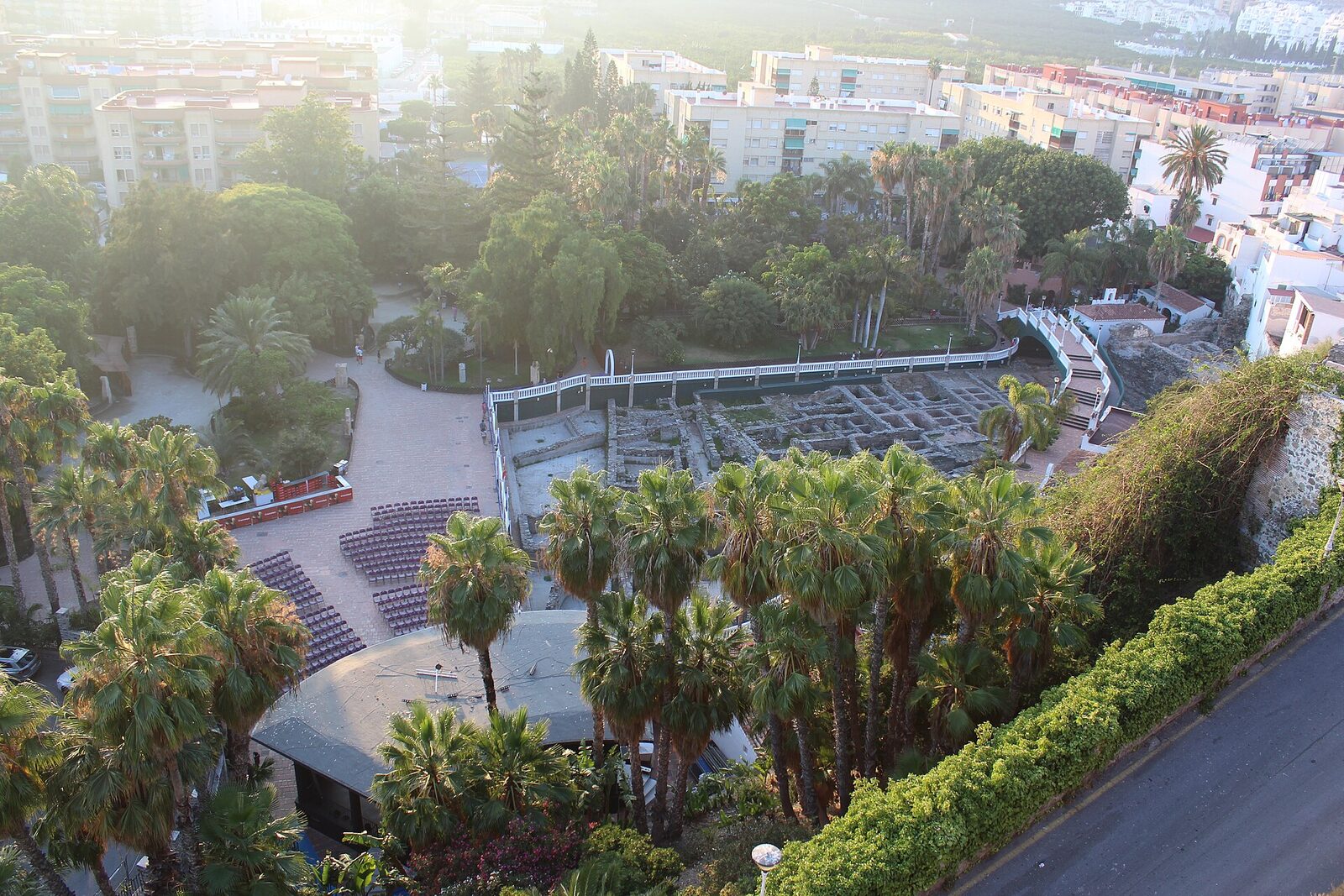

The park below the castle on the west side is both a botanical garden and an archaeological site. Among palms, frangipani and hundreds of subtropical species lie the remains of the Roman fish-salting factory: the stone tanks where fish was laid down in salt to become garum, in operation for seven hundred years. The park's open-air stage hosts the jazz festival in July. Free entry, open daily.
Cueva de Siete Palacios – the archaeological museum
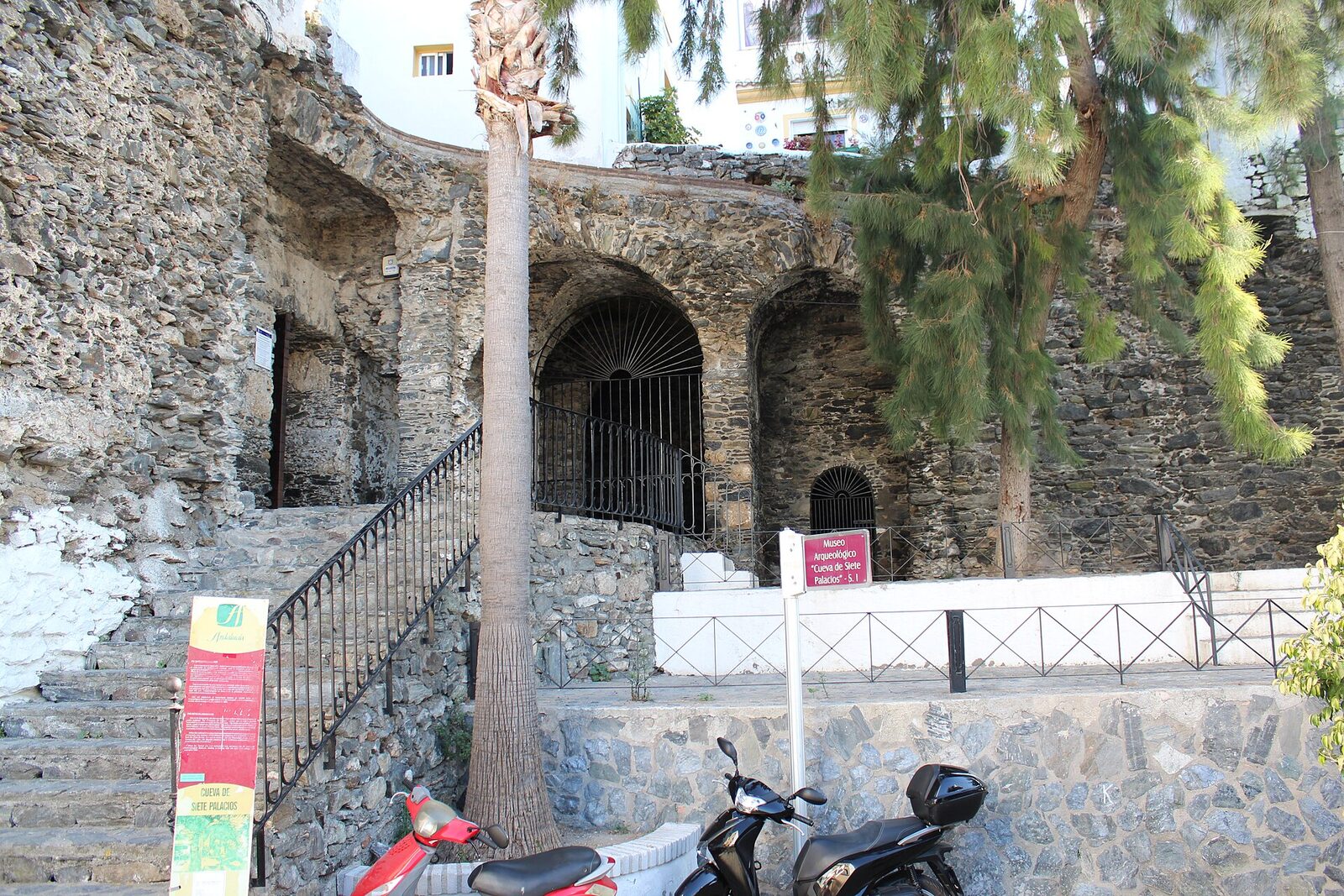

The 'Cave of the Seven Palaces' is not a cave but a Roman vaulted substructure for a large building – perhaps a temple – later built over. The vaults house the town's archaeological museum, with finds from Phoenician, Roman and Moorish times. The treasure is the vase of Pharaoh Apophis from the seventeenth century BC, bearing the oldest writing found in Spain. In the old town on the way up to the castle; same ticket.
Roman baths and aqueduct
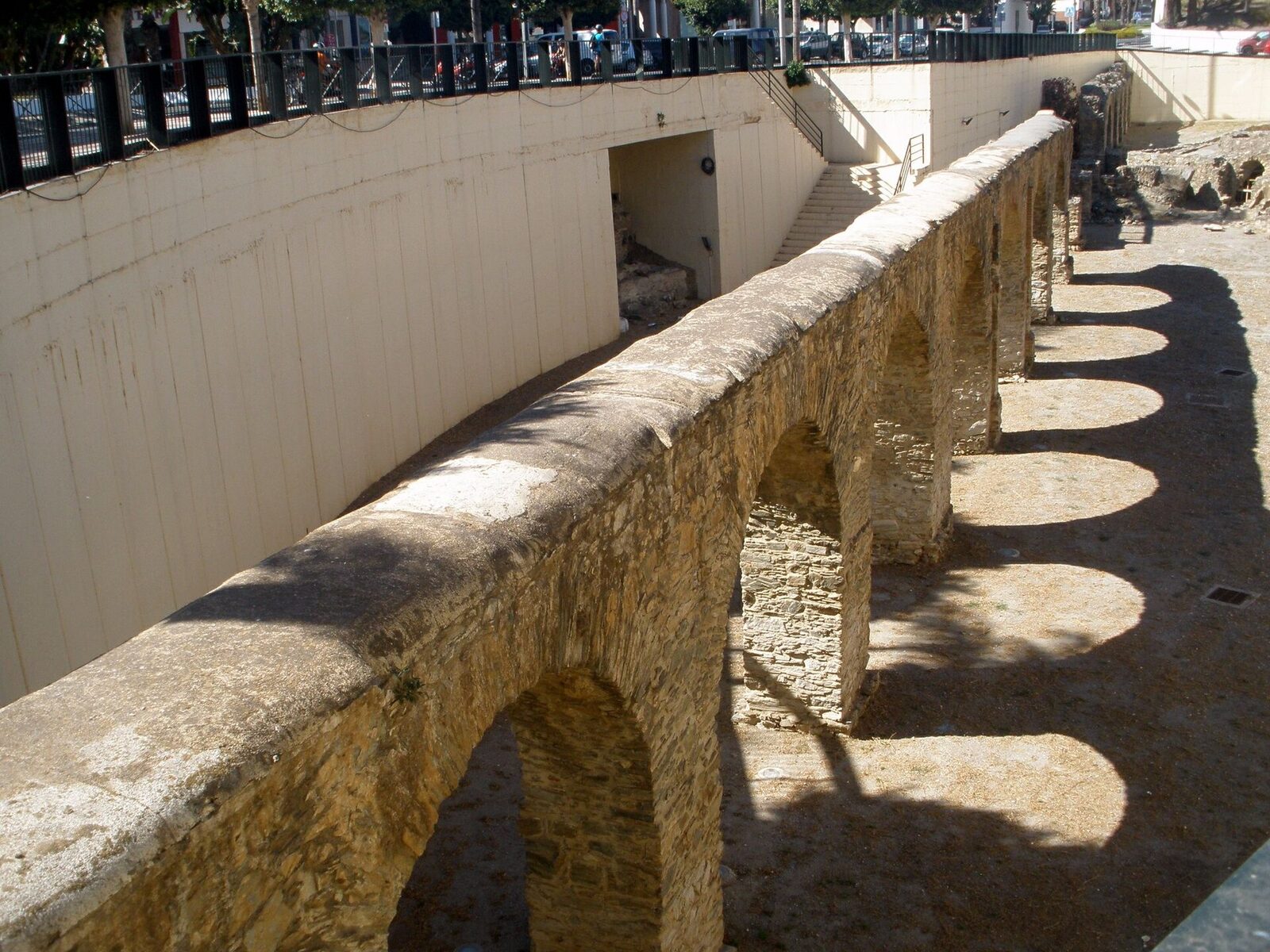

At Carrera de la Concepción, in the middle of the modern town, the Roman baths and an arch of the aqueduct that supplied them were excavated in the 1990s. The aqueduct continues north in four stretches through the Río Seco valley towards Torrecuevas, where the best-preserved section stands in an orchard – and still carries water. In the same valley are the two Roman burial towers, the Torre del Monje and La Albina, with their niches for ash urns. A car or a good walk; signposted from the road to Jete.
The old town and the church
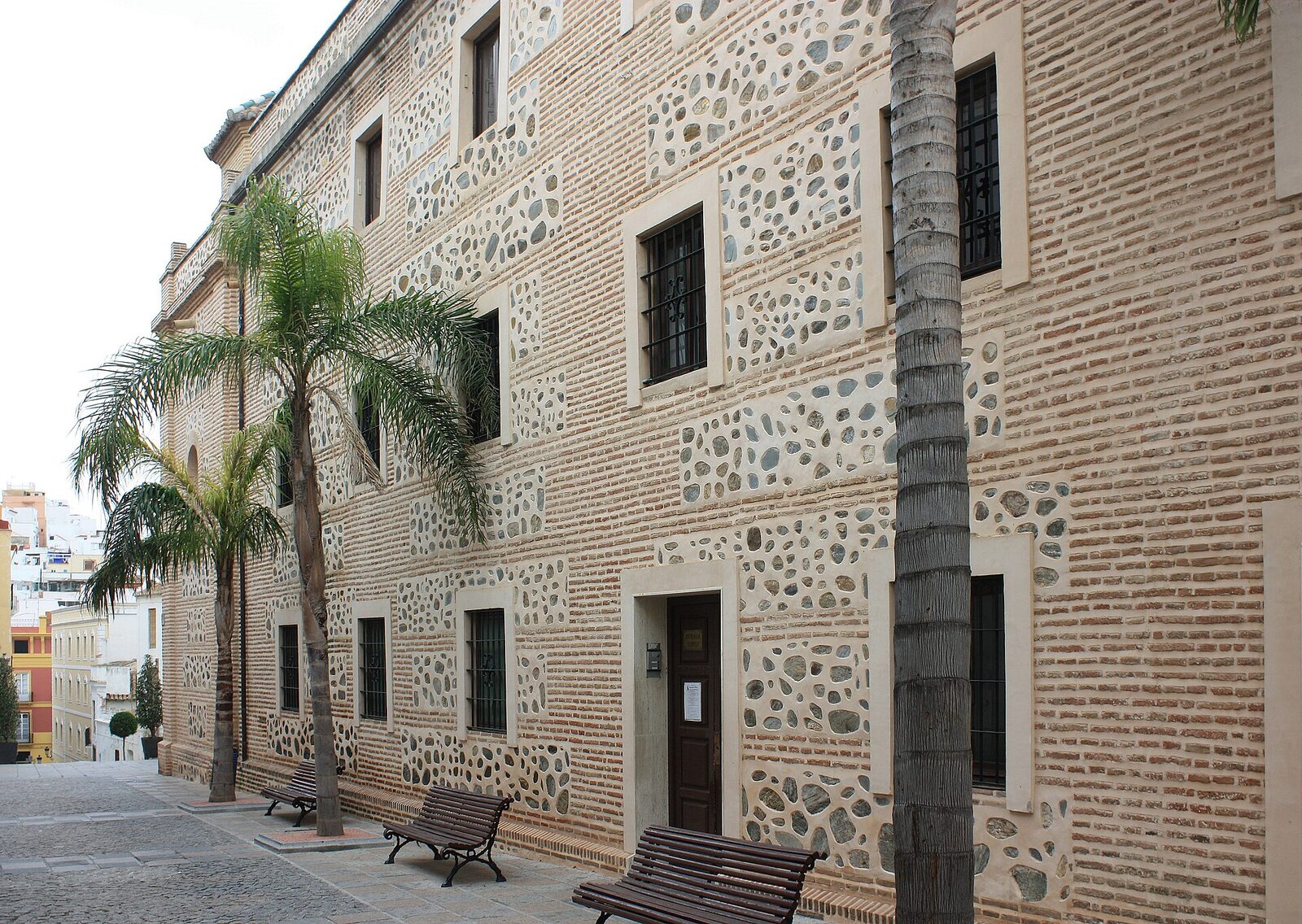

The old town climbs the rock between Plaza de la Constitución and the castle: white houses, steep lanes, flower pots and small squares. On Plaza de la Constitución are the seventeenth-century town hall and the cafés under plane trees. The Iglesia de la Encarnación (1600–1620), designed in the Escorial style of Juan de Herrera, was the first church in Granada province built in the Renaissance manner; the bell tower was added in 1700. By the beach is the small Ermita de San Sebastián.
Palacete de La Najarra
A neo-Moorish mansion from the mid-nineteenth century, built for a sugar manufacturer, with horseshoe arches, tiles and a garden of fountains. It houses the tourist office and an exhibition room; the garden is worth a visit in itself. Avenida de Europa, near the bus station.
Loro Sexi
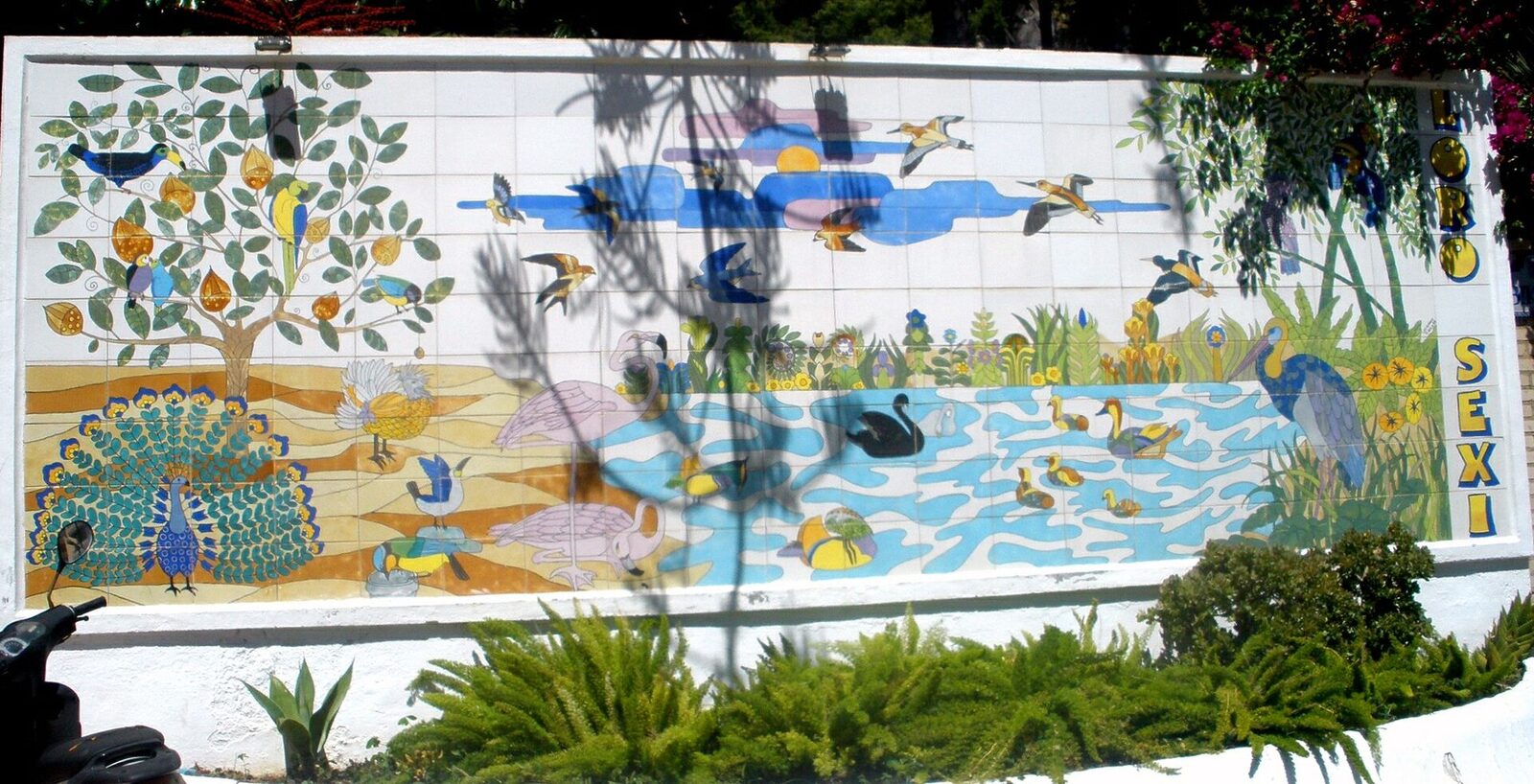

The bird park on the slope of the castle rock above Parque El Majuelo has around 1,500 birds of over a hundred species – parrots, flamingos, peacocks, toucans – in a terraced garden. Just the right size for an hour with children. Open daily; admission charge.
La Herradura and Punta de la Mona
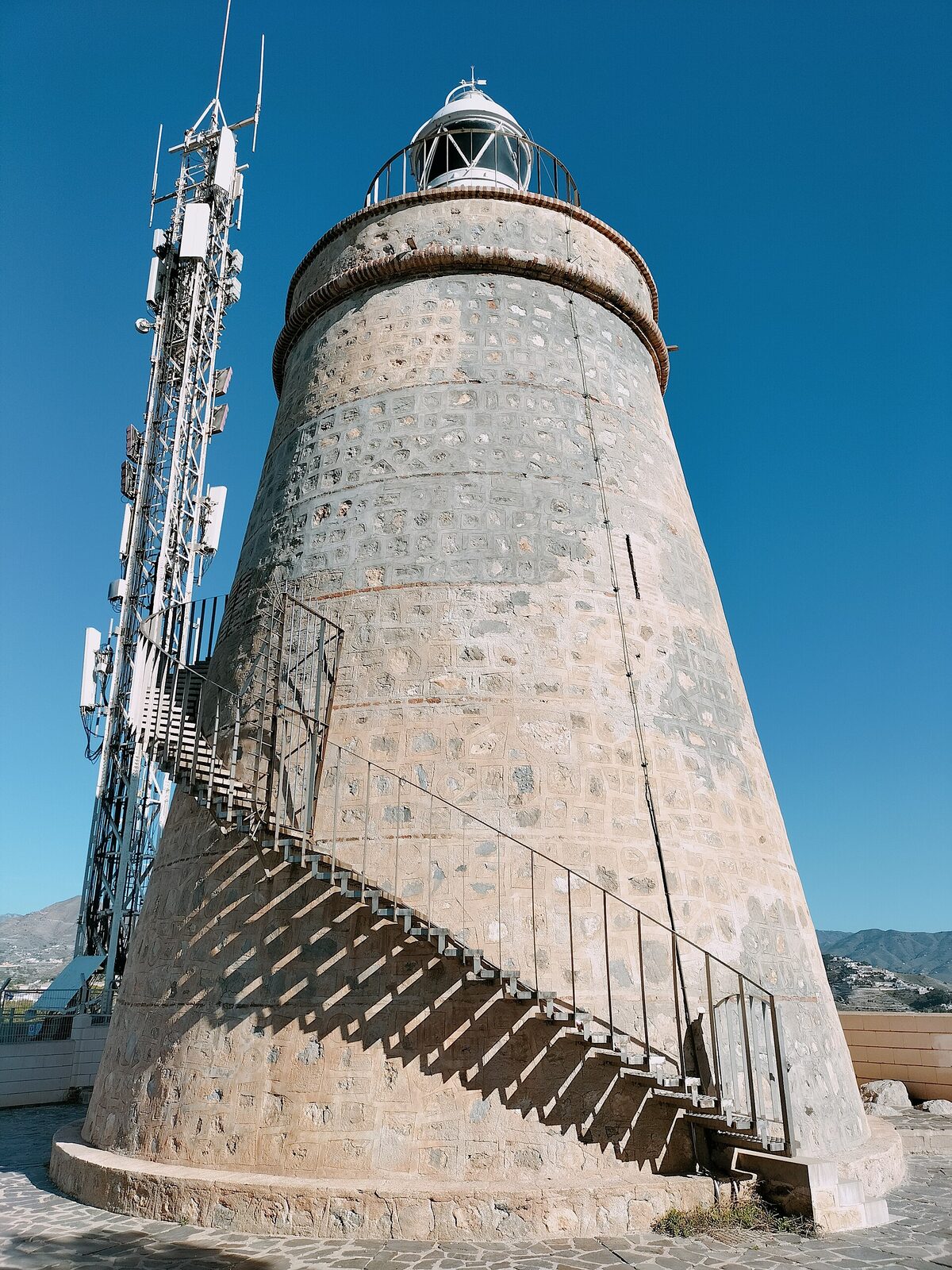

In La Herradura stands the Castillo de La Herradura, an eighteenth-century artillery fort on the beach that is now a cultural centre with exhibitions. On the promenade is the monument to the galley disaster of 1562. On the Punta de la Mona headland between La Herradura and Almuñécar is the lighthouse, built into a sixteenth-century watchtower, with views over both bays, and below it the Marina del Este yacht harbour.
Day trips
Granada and the Alhambra are 80 km away – a good hour by car on the A-44, or by ALSA coach from the bus station. Book Alhambra tickets well in advance. Nerja with the Balcón de Europa and the Nerja caves is 25 km west; Salobreña, the white village on the rock, 13 km east. The mountain villages of the Río Verde valley – Jete, Otívar and Lentegí – are half an hour away and offer cherimoya orchards, viewpoints and the Los Cahorros gorge. Frigiliana above Nerja is one of Andalusia's prettiest white villages.