
The climate – why 'tropical'
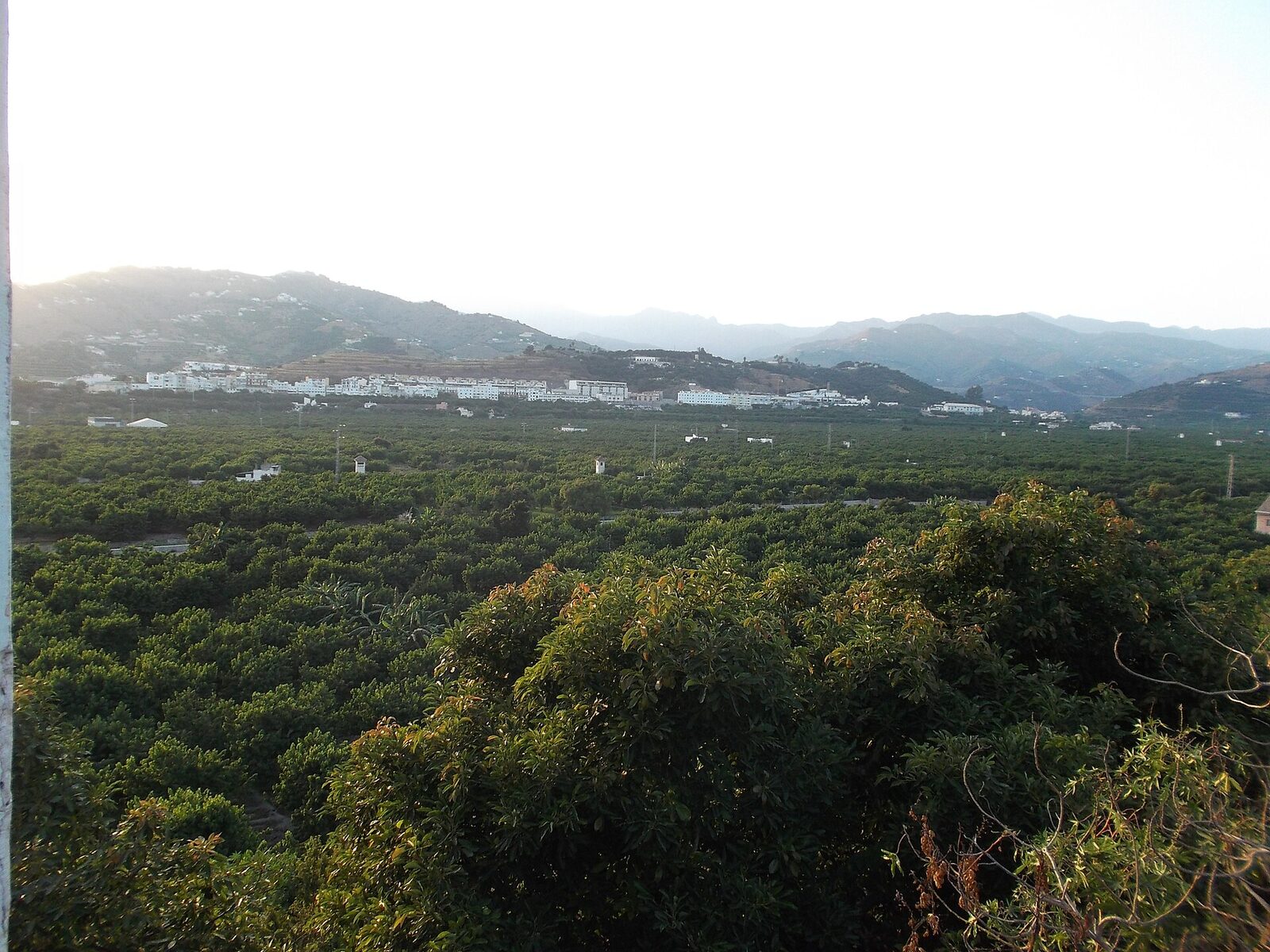
The Costa Tropical has one of Europe's mildest climates. The mountains shut out the cold air from the north, the sea evens out the temperature, and the result is an annual mean around 18 °C, some 320 sunny days and winters in which the daytime temperature rarely drops below 10 °C. Rain falls almost exclusively between October and April, often in short, heavy showers. Summers are hot (28–32 °C) but seldom as hot as inland; the sea breeze keeps them bearable.
| Month | Day °C | Night °C | Sea °C | Rain days |
|---|---|---|---|---|
| January | 17 | 9 | 15 | 5 |
| April | 21 | 13 | 16 | 4 |
| July | 29 | 21 | 23 | 0 |
| September | 27 | 20 | 24 | 2 |
| November | 20 | 12 | 19 | 5 |
Maro–Cerro Gordo
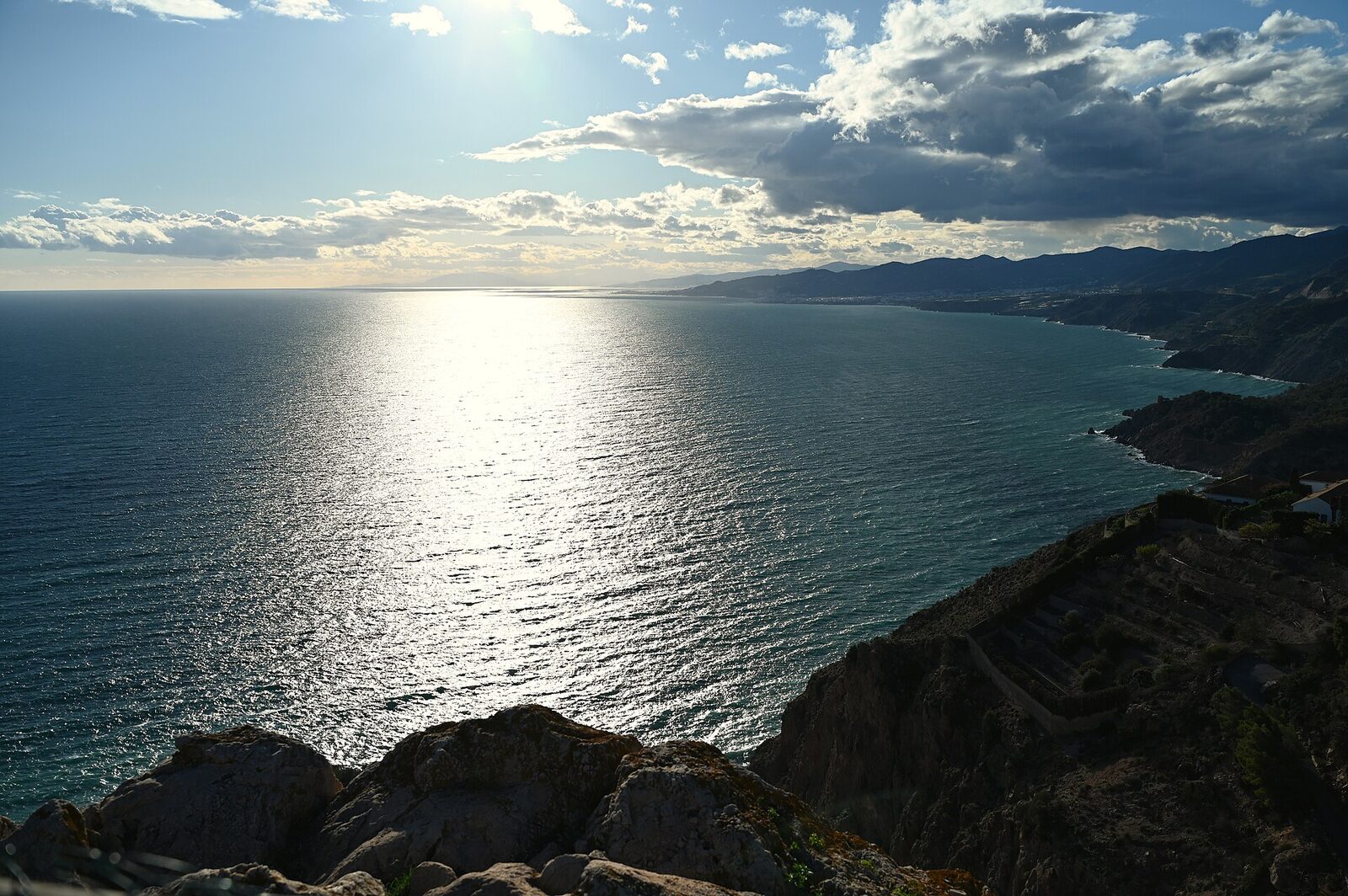

The Acantilados de Maro–Cerro Gordo nature reserve runs twelve kilometres along the coast from La Herradura into Málaga province, with cliffs plunging straight into the sea, small coves and a marine zone protected as one of the finest in the Mediterranean. On land: dwarf palm, wild olive and rare limestone plants; in the sea: seagrass meadows (Posidonia), coral, moray eels and sea turtles. Paths from the Cerro Gordo car park to the watchtower and down to the coves. Bring water and good shoes – it is steep and dry.
The mountains: Sierras de Tejeda, Almijara y Alhama
Behind the coast rises the Sierras de Tejeda, Almijara y Alhama natural park, 40,000 hectares of limestone mountains up to 2,065 m (La Maroma). From Almuñécar the dramatic road to Otívar and Granada climbs through the gorge, with viewpoints such as the Mirador de Cabra Montés. Walking trails from Otívar and Lentegí; Spanish ibex are often seen. Further off, but visible from the beach in winter, lies the Sierra Nevada with snow from November to May – skiing in the morning and swimming in the afternoon is a classic, if long, day out.
The Río Verde valley and the subtropical orchards
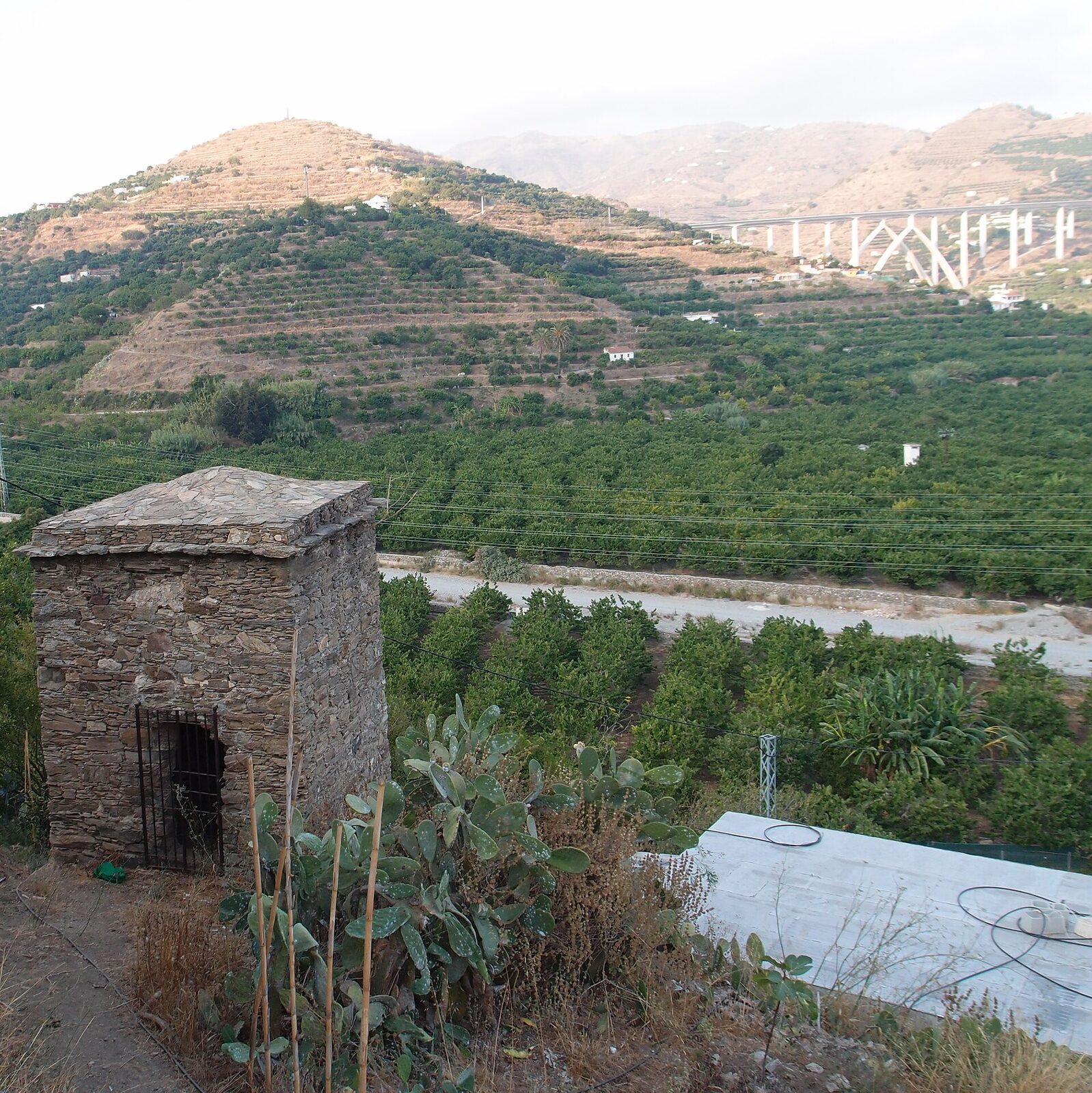

North of town opens the Río Verde vega, a valley covered in terraced orchards right up to the mountain villages of Jete, Otívar and Lentegí. Here grow Europe's biggest crops of cherimoya (Annona cherimola, the custard apple), with a protected designation of origin since 2002, alongside avocado, mango, loquat, guava and sugar cane. The cherimoya season is September to February; mango August to October; avocado in winter. The road up the valley is beautiful, and the fruit stalls along it sell straight from the orchards.
Diving and snorkelling
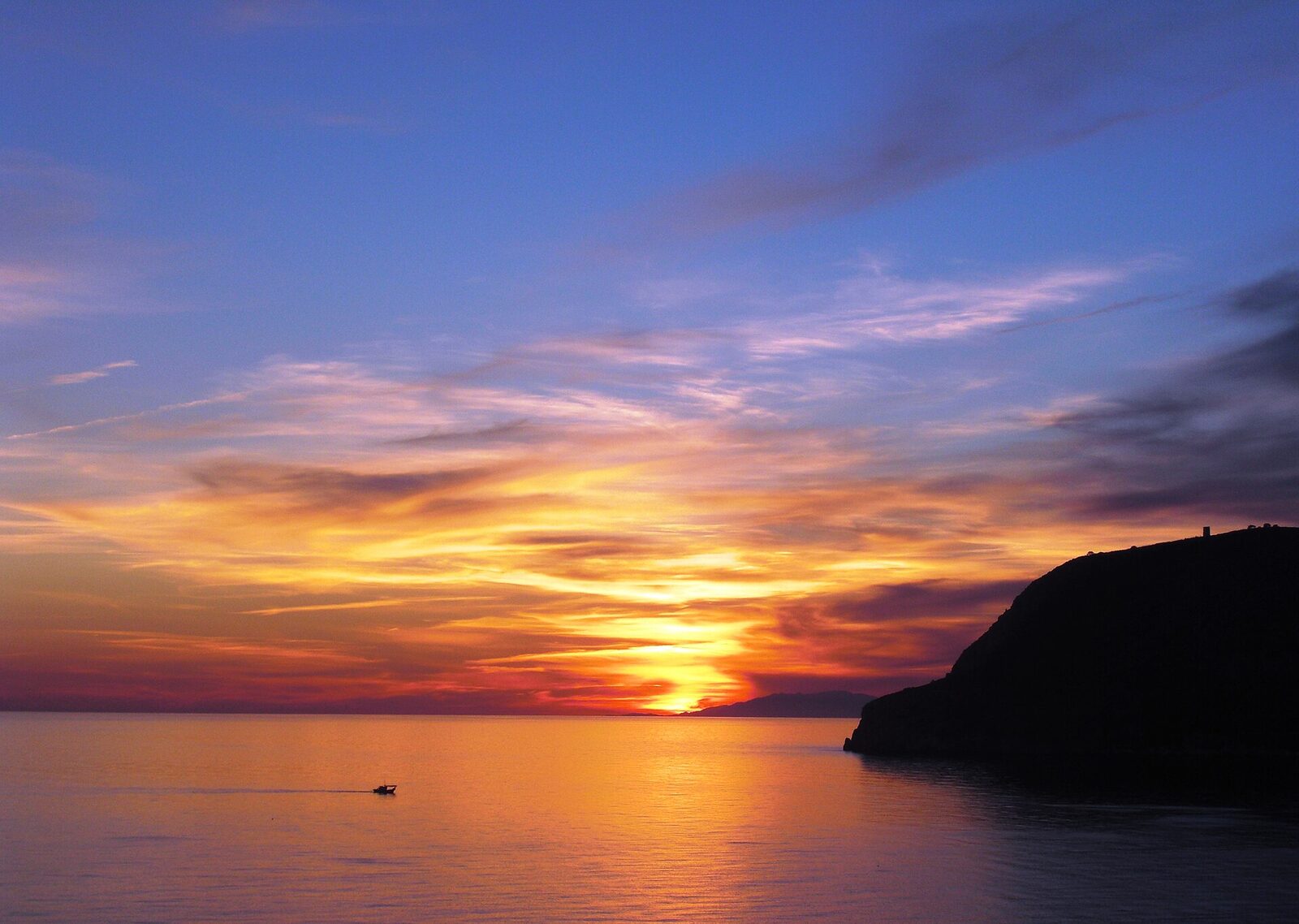

La Herradura is Andalusia's best-known diving bay: sheltered water, visibility of 15–30 metres, seagrass meadows and rocky bottoms off Punta de la Mona and Cerro Gordo with octopus, moray, sunfish and sometimes dolphins. Half a dozen dive schools in the village and at Marina del Este offer courses and trips all year. Snorkelling is good at the Peñones de San Cristóbal, Cantarriján and Calaiza.
Walks
The coast path: Almuñécar–Cotobro–Punta de la Mona–La Herradura, just over ten kilometres on paths and streets with constant sea views. Cerro Gordo: from the car park on the N-340 to the tower and down to Cantarriján, 5 km return, steep. Río Verde: from Jete along the irrigation channels (acequias) through the orchards. Los Cahorros de Otívar: a gorge walk with bridges and tunnels. Walk early in the morning in summer; the mountains have no shade and no springs.