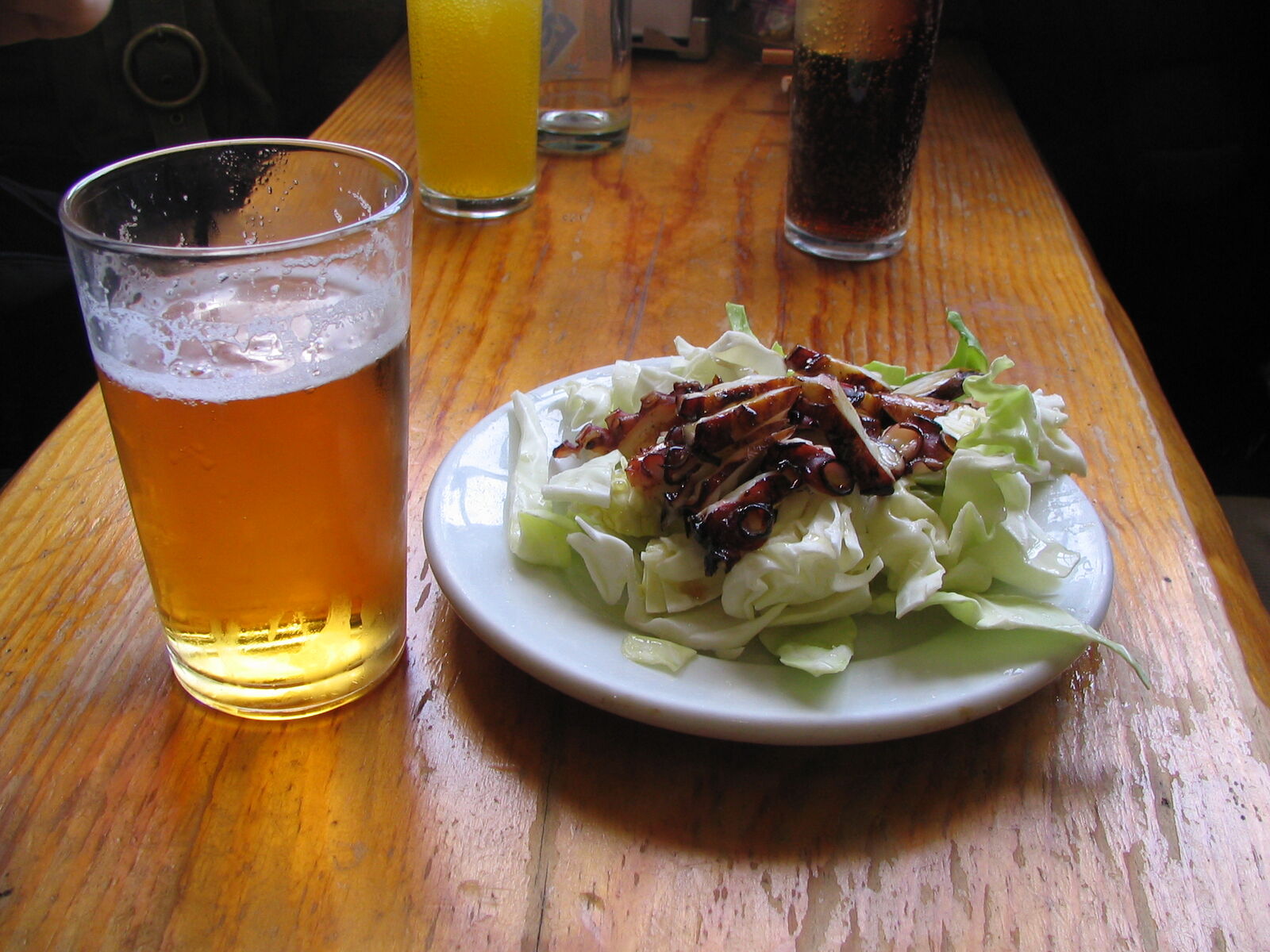

Why the tapa is free
In most of Spain a tapa is a small dish you order and pay for. In the province of Granada it is something else: a small portion of food that comes with every drink, without asking and without charge. Almuñécar is in the province of Granada, and the tradition is as strong here on the coast as it is up in the city. Order a beer and you get a beer and a plate; order another and a new plate arrives, usually with something different on it.
Where the custom comes from is disputed. The most repeated story is that Alfonso X ('the Wise') decreed in the thirteenth century that inns must serve some food with wine, so that guests did not get too drunk. Another points to the word itself: tapar means to cover, and Andalusian taverns laid a slice of bread or ham over the glass against flies and dust – and salty ham made the customer thirsty for more. A third says innkeepers who could not write a menu let guests taste instead. The truth is probably that all three played a part.
Why Granada kept the free tapa when Seville, Málaga and Madrid moved to paid tapas is simpler: competition and habit. In a province where every bar gives the tapa away, customers choose their bar by the tapa, and a bar that stops giving empties fast. There is no law behind the custom; the customers enforce it. The same tradition lives on in Jaén, in parts of Almería and in León, but Granada is its heart – and Almuñécar, La Herradura and Salobreña are its beach.
How it works
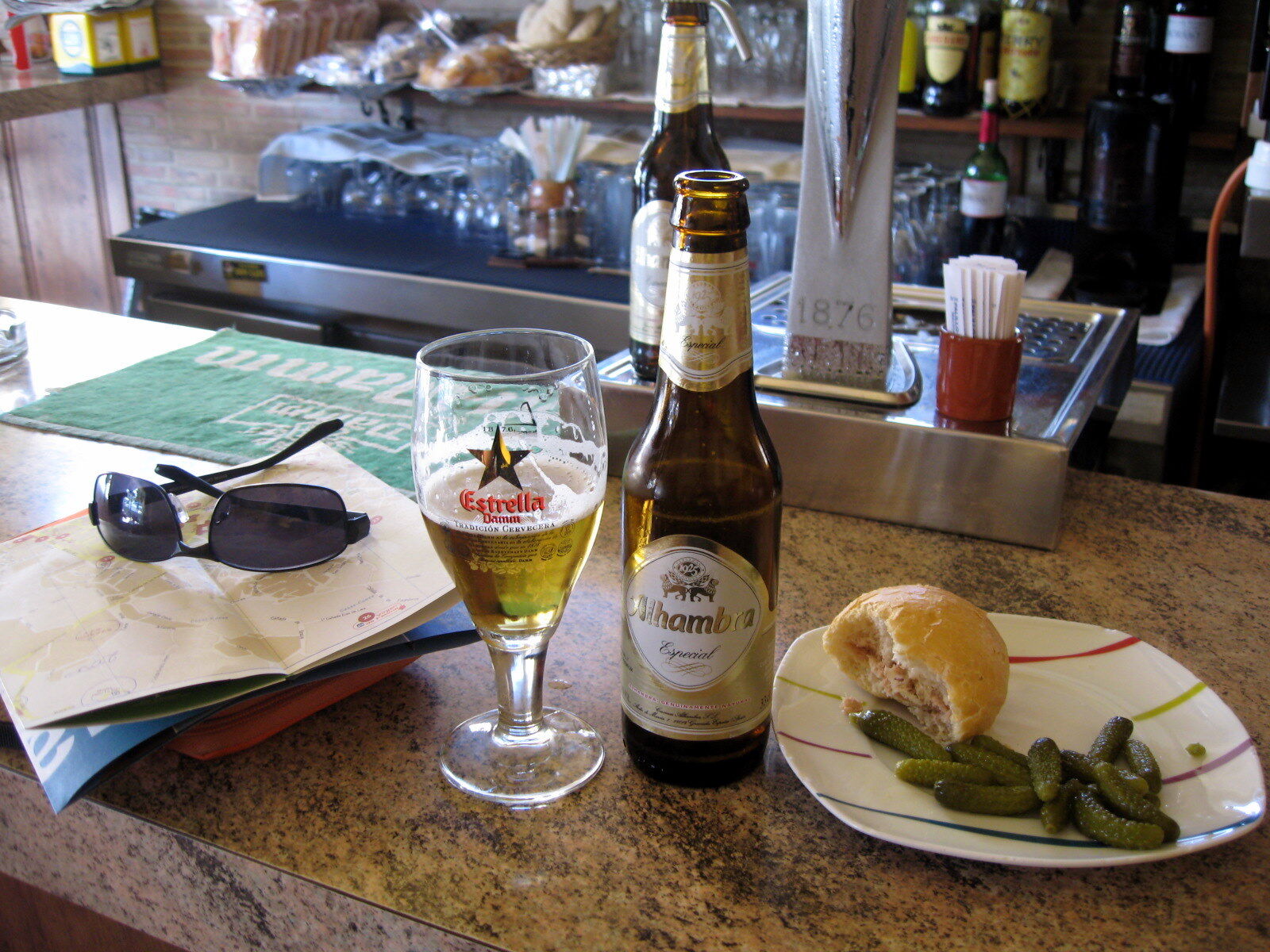

Stand at the bar or sit at a table and order one drink per person. A minute or two later the tapa arrives, one per drink. Many bars serve the tapa por orden, in a set sequence that changes with every round: olives or ensaladilla with the first beer, something hot with the second, often something better with the third. Others let you choose from a list – sometimes written, sometimes recited by the waiter at speed – of thirty, forty or fifty tapas. Do ask: ¿qué tapas hay? (what tapas are there?).
The rule is that the tapa is included in the price of the drink. A caña (small draught beer) costs around two euros in Almuñécar, and for that you get the beer and a plate that often passes for a light lunch. Two or three rounds make a full meal, for the price of a couple of coffees at home. If you want more of something, order a media ración or ración from the menu and pay for it – that is how the bars make their money, and it is appreciated.
- Price
- A caña, a glass of wine or a soft drink with tapa costs 1.80–2.50 euros in most bars. A tubo (larger beer) a little more.
- What counts
- Beer, wine, tinto de verano, sangria, soft drinks and usually alcohol-free beer earn a tapa. Coffee, water and spirits rarely do – ask if unsure.
- Hours
- The kitchen runs at full tilt roughly 13:00–16:00 and 20:00–23:30. Outside those hours the tapa gets simpler: olives, crisps, a piece of cheese.
- Children
- A child's soft drink earns a tapa too. Say so if the children do not eat fish – many bars will happily swap.
- Ruta de la Tapa
- The town's tapas trail is usually held in April: some thirty bars compete with a special tapa, and the public votes.
Good to know
The tapa is a gift, not a right, and a little courtesy goes a long way. These are the unwritten rules locals follow without thinking about them.
- Order by the round. One drink at a time per person, and the tapas come in their sequence. Order three beers at once and you get three tapas at once – but lose the rhythm.
- No tapa without a drink. Never ask for a tapa on top of the one you have, and do not order just a glass of water. If you are hungry, order a ración.
- Mention allergies beforehand, not once the plate is on the table. Sin gluten, sin pescado, sin cerdo are understood everywhere.
- Do not complain about the tapa. If you do not like it, leave it. Sending back a free tapa makes you the talk of the bar.
- Stand at the bar. That is where the tapa is quickest, the waiter chattiest and the price sometimes lower than on the terrace.
- Cash. Most bars take cards these days, but some of the classics do not. Keep a couple of notes in your pocket.
- Tipping is not expected. Leaving the change or rounding up is plenty.
- Closing days. Many bars close one day a week, often Sunday or Monday, and for a few weeks after the summer. Check before walking far.
What lands on the plate
Almuñécar's tapas are the coast's: plenty of fish and seafood from Motril's port, plenty of frying, and a few dishes from the mountain villages inland. These are the things that tend to turn up:
- Pescaíto frito – fried small fish: boquerones (anchovies), jureles, chanquetes, squid rings. The coast's classic.
- Boquerones en vinagre – anchovies marinated in vinegar, garlic and parsley.
- Pulpo – octopus, a la gallega with paprika or seco Motril-style, dried and grilled.
- Gambas – prawns, boiled with salt or al pil-pil in hot oil with garlic and chilli.
- Ensaladilla rusa – potato and mayonnaise salad with tuna, always first on the list.
- Migas – fried breadcrumbs with peppers, often with a sardine or a few olives alongside. Mountain-village food, common in winter.
- Carne en salsa – pork stewed in sauce, sometimes choto (kid) or carrillada (cheek).
- Paella – a small spoonful from the day's pan, above all at weekends.
- Tortilla, jamón, queso – potato omelette, cured ham and cheese on a piece of bread.
- Rosca – a ring-shaped bread filled with ham, tomato, tuna or meat. A Costa Tropical speciality; as a tapa you get a slice, as a ración a whole one.
- Habas con jamón – broad beans with ham in spring; pipirrana – cold tomato and cucumber salad in summer.
The ten best bars for free tapas
The list is based on where locals go, on local guides and on reviews in summer 2026. All ten give a tapa with the drink; they differ in whether you get to choose, and in what they do best. The old-town bars are within five minutes' walk of each other, so a round of three or four is easily done.
- Bar Los Pajaritos – Cuesta del Castillo 1, old town, a block from Playa Puerta del Mar. Small, family-run and without a terrace: this is a standing-at-the-bar place. The tapa is always fish or seafood and comes in a set order, so stay for several rounds. Packed to the rafters at weekends – a good sign.
- Bar Higuitos – Plaza de los Higuitos 5, behind Plaza de la Constitución. Big terrace on a small car-free square. The tapa changes with the round: paella, filetillos, home-made stews, and roscas as a ración. Arrive before 14:00 if you want a table. Closed Sundays.
- La Bodeguita – Calle Manila 8, near Playa Puerta del Mar. Pescaíto frito is the house pride: fried small fish, squid and migas with fish. Chaotic and loud in the best way.
- Antonia Andalusí – Paseo China Gorda 9, at the western end of Playa de San Cristóbal. Big tapas, paella and grilled fish at a bar counter with the sea in front; a restaurant behind if you want to sit down properly. Closed Mondays.
- Bodega Francisco I – Calle Real 7, in the heart of the old town. Hams hanging from the ceiling, wine barrels and old photographs; a proper bodega where the tapa follows the wine. Won the town's Ruta de la Tapa in 2017. Bring cash.
- Café Bar Los Cactus – Carrera de la Concepción 3, by the main street. Some thirty tapas to choose from freely – the waiter recites the list – from carne con tomate and pulpo a la gallega to boquerones and boiled prawns. Fast, unpretentious, cheap.
- Mesón Los Arcos – Avenida de Cala 11. More than fifty tapas on the list to choose from, the portions are large and a drink with tapa costs around 2.50 euros. Churros in the morning.
- La Cabaña – Avenida de Europa 25, next to Parque El Majuelo. A written menu of more than forty tapas to choose from, food from the Alpujarras, a terrace and popular prices. A good first stop on the way up from the beach.
- La Trastienda – Plaza Kelibia. A gastrobar rather than a neighbourhood bar: small, considered tapas, roscas in more than twenty variants, craft beer and a good wine list. A little dearer, a lot calmer.
- Mesón Baena – Paseo Andrés Segovia, La Herradura. The village's bar, with a terrace facing the beach, a good tapa with the drink and a proper menu of grilled fish. Its neighbours along the promenade – Bola Marina, Bar El Camping – do the same.
More places
Beyond the top ten there are plenty of bars that do the tapa well. A few that locals mention:
- Bar Mamá Laura – Avenida Costa del Sol 3, by the market hall. Mini burgers and more inventive tapas that you choose yourself.
- Cervecería Salitre (Lute y Jesús) – on the seafront promenade. Beer and the coast's tapas close to the water.
- Taberna Cafeciño – Plaza de los Higuitos. Fried eggs with potatoes as the tapa.
- Bar Ozemi – couscous as a tapa, unusual and good.
- Bar Salón – Avenida Costa del Sol. Paella with the beer.
- Bar Er Tapeillo – meat in sauce and other stews.
- Mesón El Corzo – won the Ruta de la Tapa in 2018 with crispy ox cheek.
- Chiringuito El Piliki – beach bar with fish and seafood tapas with the drink; most chiringuitos, by contrast, charge.